

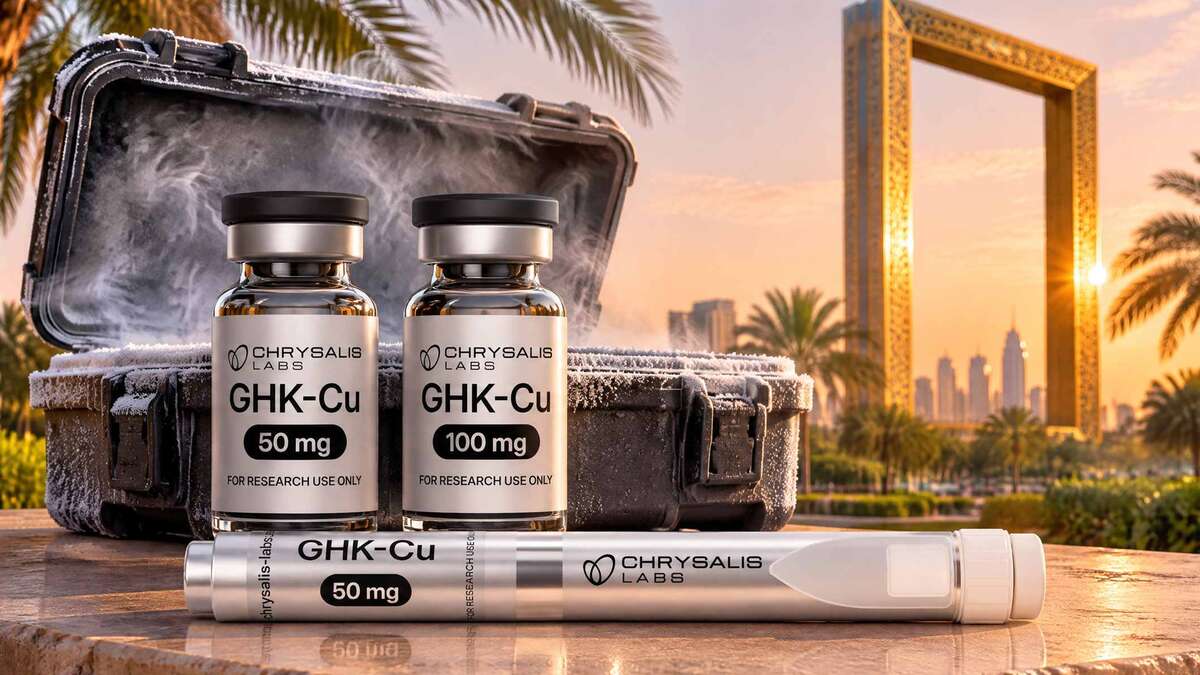
GHK-Cu sizes: 50 mg, 100 mg, vial or pen
Up to about 16 mg of every 100 mg on a GHK-Cu label is copper, not peptide. What the number holds, and how to put a 50 mg and a 100 mg unit on one price scale.
Everything on this site is supplied strictly for in-vitro laboratory research. Not for human or veterinary use.
See our Research Use Only policy (opens in a new tab)For research use only


Research areas
Strictly for in-vitro laboratory research. Not for human or veterinary use.

The short answer
BPC-157 is a peptide: one chain of 15 amino acids, GEPPPGKPADDAGLV, with the formula C62H98N16O22 and a molecular weight of 1,419.5 g/mol.1 Its name comes from BPC, a much larger protein, and a 1993 paper named this 15-amino-acid piece of it BPC 157.2
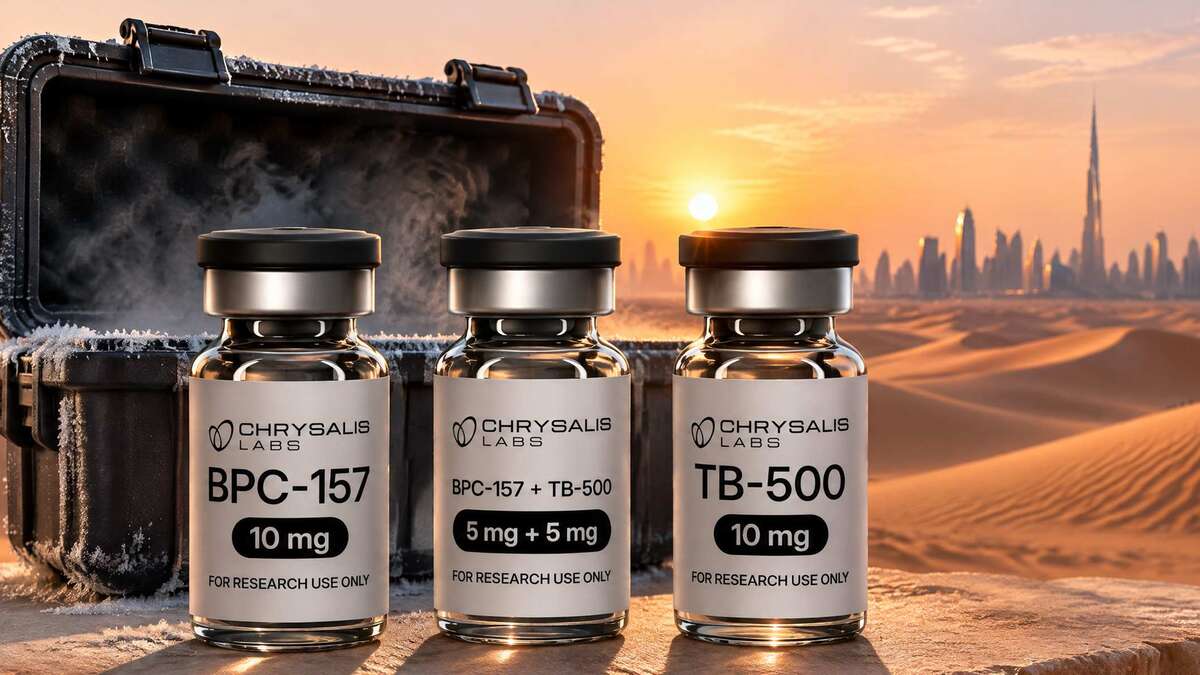
Chrysalis Labs lists it as a 10 mg Vial and a 10 mg Pen, plus a BPC-157 + TB-500 blend in both formats (as of 17 Nov 2026).
Strictly for in-vitro laboratory research. Not for human or veterinary use.
Chemistry from PubChem;1 first description from the 1993 paper;2,5 listing as of .
Fifteen amino acids, joined end to end in a single chain. Amino acids are the building blocks of proteins. Twenty kinds are common, and each has a one-letter code.7,6
Read in those codes from the start of the chain (the N end) to its finish (the C end), BPC-157 spells GEPPPGKPADDAGLV.1,7
Nothing is bolted on at either end. PubChem writes the molecule H-Gly-…-Val-OH, and in the standard notation that H and OH mean plain ends: a free amino group at the start, a free acid group at the finish.1,10
BPC-157, bead by bead
15 amino acids · 1,419.5 g/mol
Three prolines in a row, places 3 to 5
Eight kinds of amino acid fill the 15 places (our count): proline 4 times, glycine 3, alanine and aspartic acid twice each, and glutamic acid, lysine, leucine and valine once each.
Proline, and lots of it. Places 3, 4 and 5 read PPP.5 Proline is the odd one out among the common amino acids: its side group curls back onto its own nitrogen and closes a ring.7 With a fourth at place 8, more than a quarter of the chain is proline.
Acid on the side. Glutamic acid and both aspartic acids carry an acid group on their side chain.7 Lysine, at place 7, carries a second amino group.6
Every letter counts. Change one and you have a different molecule. Put the same 15 in another order and the weight stays identical, yet the peptide is different. Only the sequence pins BPC-157 down. New to these strings? Read How to read a peptide sequence.
For scale, GHK-Cu is built on three amino acids and MOTS-c on 16.
From a bigger protein. In 1993 a team at the University of Zagreb wrote up a protein called BPC, with a weight of about 40,000, and a 15-amino-acid fragment of it that they named BPC 157.2,4 Papers spell the letters out as “body protection compound”, the name given to that parent protein.3
A small piece of a big molecule. The fragment weighs 1,419.5 against the parent's 40,000 or so: about one twenty-eighth.1,2
And the 157? None of the papers we read explains the number.
Names to search. Papers write BPC 157 with a space and often call it a pentadecapeptide: penta for five, deca for ten.3,5 Our label reads BPC-157. PubChem files both under one record, with PL-14736, PL-10, PLD-116 and Bepecin.1 Search papers under every name.
C62H98N16O22: 62 carbon, 98 hydrogen, 16 nitrogen and 22 oxygen atoms. 198 atoms in all, 100 of them heavier than hydrogen.1
BPC-157 on paper
1,419.5g/mol, molecular weight
C62H98N16O22 · exact mass 1,418.70
Check it by hand. Each link between two amino acids gives off one water.7 Fifteen amino acids make 14 links: add up the 15 single amino acids, take away 14 waters, and you land exactly on C62H98N16O22 (our arithmetic).
There are two ways to weigh a molecule on paper, and PubChem gives both.1
Both are correct, 0.8 apart. A lab report should say which one it quotes.
Bare peptide or salt? These figures are for the peptide alone. A finished peptide can keep counter-ions (small charged partners) from its making, such as trifluoroacetate,8 and PubChem lists a BPC 157 trifluoroacetate salt among its names.1 If a certificate names a salt, check which form its weight belongs to.
By chemistry, one amino acid at a time. Most peptides today come from solid-phase peptide synthesis:8 the chain is held on a solid support and grown step by step, in a set order. A paper behind our BPC-157 compound profile says the BPC 157 it worked with was synthesised.4
Where synthesis slips. If a step falls short, some chains end up with an amino acid missing. They are among the typical by-products of synthesis,8 and they are what a purity test is built to catch. Our basics guide shows the method step by step.
A certificate of analysis, or COA, is the lab report for one batch. For BPC-157, hold it against five numbers:
Identity, by mass spec. The machine weighs molecules. In electrospray mass spec they pick up charge, mostly by gaining hydrogen ions, and are sorted by weight divided by charge. Bigger molecules can carry more than one charge,9 which is where numbers 4 and 5 come from.
Where BPC-157 lands on a mass spec
Purity, by HPLC. The sample is pulled apart and each part shows as a peak. The big one is the chain. Small extra peaks are other things, such as a chain with one amino acid missing.8 How HPLC works: reading the peaks walks through a trace.
What a purity test looks for
Content. How many milligrams of compound are in the vial, set against the amount on the label.
Identity and purity are separate questions; a strong report answers both. Purity and identity: two different questions · How to read a certificate of analysis
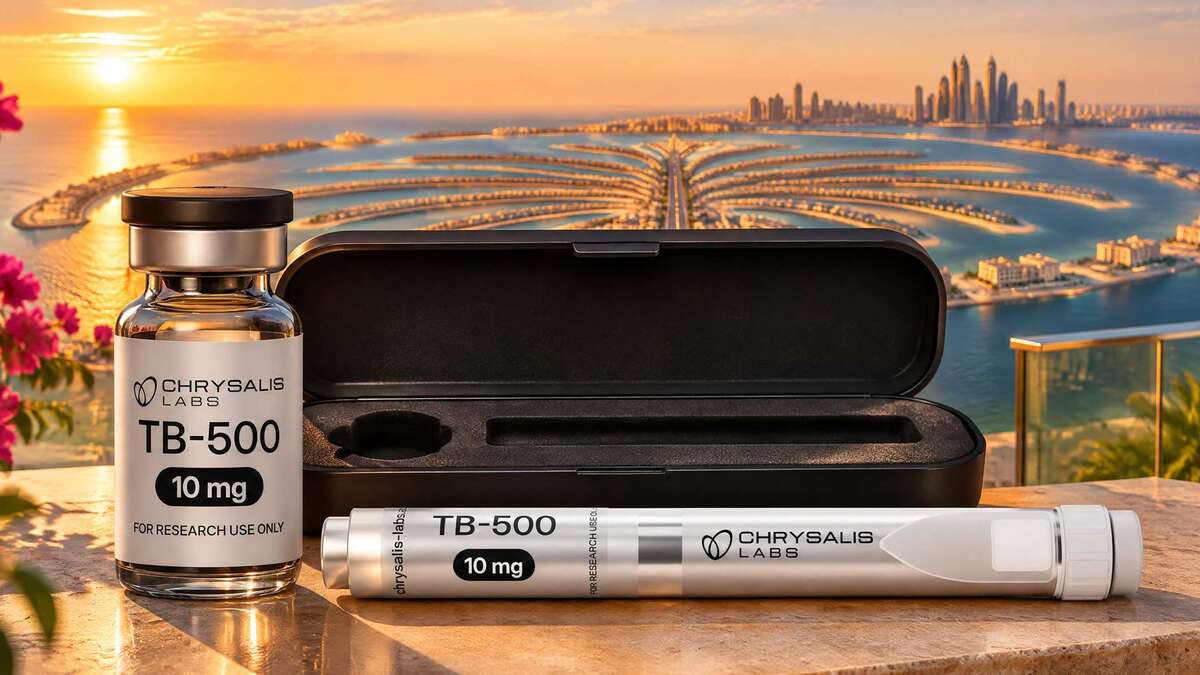
Two: a Vial and a Pen, each at 10 mg. BPC-157 + TB-500 comes in the same two formats, 5 mg of each.
| Fact | Vial | Pen |
|---|---|---|
| BPC-157 | 10 mg | 10 mg |
| BPC-157 + TB-500 | 5 mg + 5 mg | 5 mg + 5 mg |
| Arrives as | Freeze-dried powder in sealed glass | Solution, sealed inside a pre-filled pen |
| Kept, sealed | Room temperature for short periods; −20 °C for the long term, away from light | Fridge, 2–8 °C, from the day it arrives |
| Cash on delivery | Yes | Yes |
| Buy 2, get 1 free | Yes | Yes |
Same molecule in both; the state and the storage change. Peptide vial, pen or spray: the difference covers each format.
In the blend, two different molecules share one Vial or one Pen. BPC-157 vs TB-500, and the blend vial puts the two side by side. TB-500 compound profile
Delivery is AED 25 in every emirate, free from AED 350 of products after discounts. Delivery zones and charges
Cash on delivery covers Vials and Pens: 5% of the product subtotal after discounts, minimum AED 20.
Buy 2, get 1 free: pay for two of the same item (same compound, same format, same amount) and the third one is free. One free item per order.
Delivery, payment and offer as of . For researchers aged 21 and over, with a UAE address.
BPC-157 is a peptide: one chain of 15 amino acids, GEPPPGKPADDAGLV, with the formula C62H98N16O22 and a molecular weight of 1,419.5 g/mol.
GEPPPGKPADDAGLV, or Gly-Glu-Pro-Pro-Pro-Gly-Lys-Pro-Ala-Asp-Asp-Ala-Gly-Leu-Val: 15 amino acids from glycine to valine, with four prolines, three of them in a row.
From BPC, a protein of about 40,000 in weight. A 1993 paper from the University of Zagreb named its 15-amino-acid fragment BPC 157. The papers we read do not explain the number.
1,419.5 g/mol (formula C62H98N16O22), with an exact mass of 1,418.70, both from PubChem. On an electrospray mass spec it shows near 1,420.5 with one charge and near 710.8 with two; from the exact mass, the same peaks work out at 1,419.7 and 710.4.
The state it arrives in. The Vial holds freeze-dried powder sealed in glass; the Pen holds a solution sealed inside and goes in the fridge at 2–8 °C. Both are listed at 10 mg.
Chrysalis Labs lists BPC-157 as a 10 mg Vial and a 10 mg Pen, and BPC-157 + TB-500 at 5 mg + 5 mg (as of 17 Nov 2026). Delivery is AED 25 in every emirate, free from AED 350, for researchers aged 21 and over. Strictly for in-vitro laboratory research. Not for human or veterinary use.
Our own pages: BPC-157 compound profile · Delivery zones and charges · FAQ · the catalogue
Chrysalis Labs is lab-verified and delivers to all seven emirates. Cash on delivery on Vials and Pens.
Strictly for in-vitro laboratory research. Not for human or veterinary use.
Chrysalis Labs Research Team · Facts checked
Up to about 16 mg of every 100 mg on a GHK-Cu label is copper, not peptide. What the number holds, and how to put a 50 mg and a 100 mg unit on one price scale.
They share a vial and a plus sign, not a molecule: BPC-157 is 15 amino acids, and TB-500 is either a 7-amino-acid fragment or the full thymosin beta-4. Here is how they compare, and what “5 mg + 5 mg” really counts.
Catalogues often use the two names as one. The molecules behind them differ by 36 amino acids and more than 4,000 g/mol.